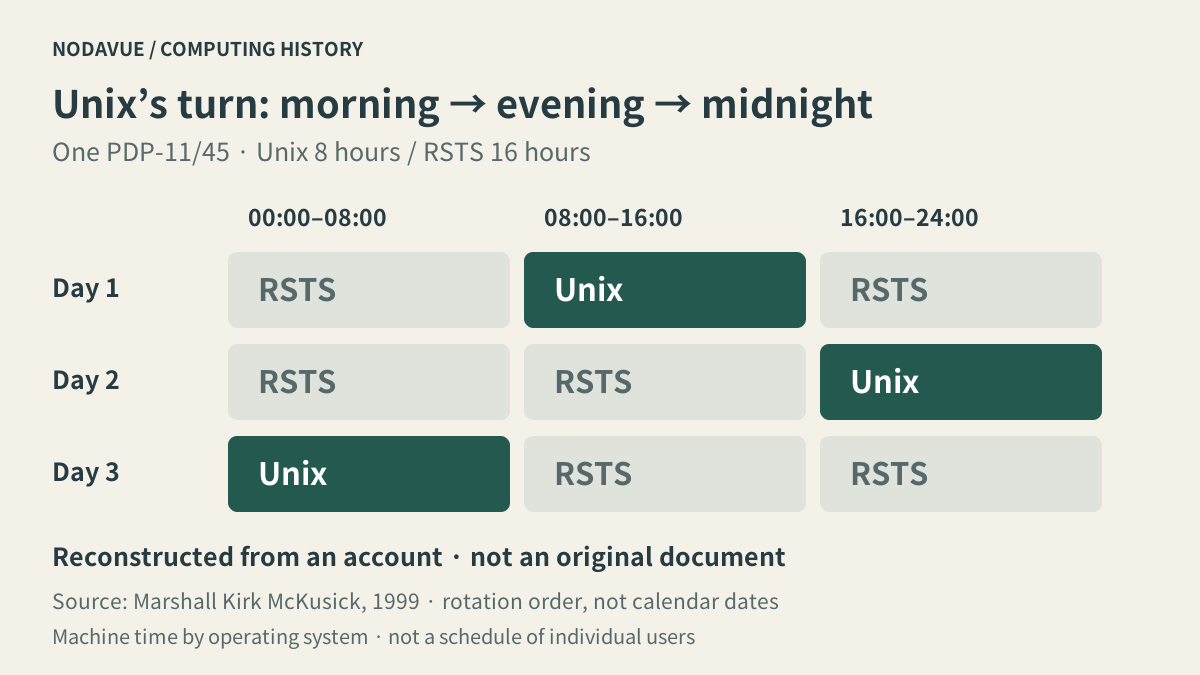
What if your window for using Unix began in the morning today, the afternoon tomorrow, and at midnight the next day? That rotation appears in Marshall Kirk McKusick’s 1999 account of early Berkeley Unix.
Computer Science, Mathematics and Statistics shared a jointly purchased PDP-11/45. Each department received eight hours daily: eight for Unix, sixteen for the RSTS system preferred by Math and Statistics. Unix rotated through 08:00–16:00, 16:00–24:00 and 00:00–08:00.
This divided the time each operating system could occupy the machine. Ritchie and Thompson’s 1974 paper already describes Unix as multi-user and interactive. Letting people share Unix and agreeing which department gets the computer are two different problems.
V’s view
V’s view. This timetable makes software history feel like a matter of setting an alarm. A feature can be wonderful and still available only at an awkward hour. Access includes the practical question of when your turn comes.
The timetable comes from a 1999 retrospective; we have not verified an original booking sheet. The comic found through GeekNews is a discovery route, not independent corroboration. For the next chapter, open McKusick’s Early History in Sources: the shortage of machine time leads to another computer.