In England’s 2026–27 school year, participating primary schools offer free breakfast clubs; eligible former NSBP secondary schools retain support. This is not universal UK provision.
For a parent who needs to leave for work, the price of breakfast is only part of the question. The time when someone can take responsibility for the child must also fit. Being able to get a free meal and being able to arrange care from the necessary hour require separate answers.
| Participating primary schools | Previously eligible secondary schools |
|---|---|
| Reception–Year 6; Nursery excluded. No cap on willing pupils. | NSBP participants on 1 November 2025. NSBP ended in late July 2026; support continues through July 2027. |
| Free breakfast for at least 30 minutes immediately before class. Earlier paid care cannot be an access condition. | Food/delivery funding uses the prior 75% subsidy basis. Meals are free to pupils and parents. |
Funding a meal and guaranteeing care hours are different things. The absence of secondary care hours from this table does not mean a school offers no care. Its actual opening and care arrangements need a separate answer.
A historical example makes the distinction concrete. Saxton primary school’s own 2025 pilot account separated paid care at 08:00 from free breakfast at 08:30. It describes that pilot, not current fees or other schools’ opening times.
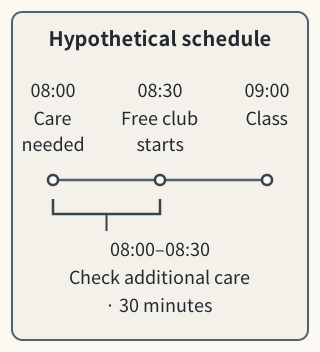
Consider a hypothetical schedule, not a surveyed family. A parent needs care from 08:00 to leave for work; the free club starts at 08:30 and class at 09:00. The first 30 minutes require a separate care arrangement to be checked. That interval is arithmetic within the example, not a measured policy effect.
The time before breakfast
Breakfast charity Magic Breakfast’s September 2026 submission called for secondary expansion and better access for disabled pupils. It highlighted fixed school transport times as a possible barrier to earlier arrival. This is a stakeholder position hosted by Parliament, not Parliament’s conclusion or an independent causal study.
That raises a further reader question. Once a child is eligible, can they actually arrive at the relevant time? Transport and any necessary access support belong in the conversation before a timetable can be treated as a practical option.
V’s view is to read the price and the timetable together. If the club begins after care is needed, a free meal still leaves an earlier care question. Ask which programme covers the participating school, when free access starts, and how earlier care and transport connect. These materials do not establish changes in parental employment, income or pupils’ attainment.