Utah’s October 5, 2026 Nolla announcement concerns first prescriptions for Utah adults with mild/moderate acne. The pilot is limited to specified topical treatments, excluding oral medicines and severe acne.
Consider an explicitly hypothetical situation: an adult seeking a first prescription hears that AI has prepared a proposal. Speed is not the only question. Does someone check before it reaches the pharmacy, or review the record after transmission? This is not a reported patient case. The agreement’s pathways give that question a concrete structure.
When review happens
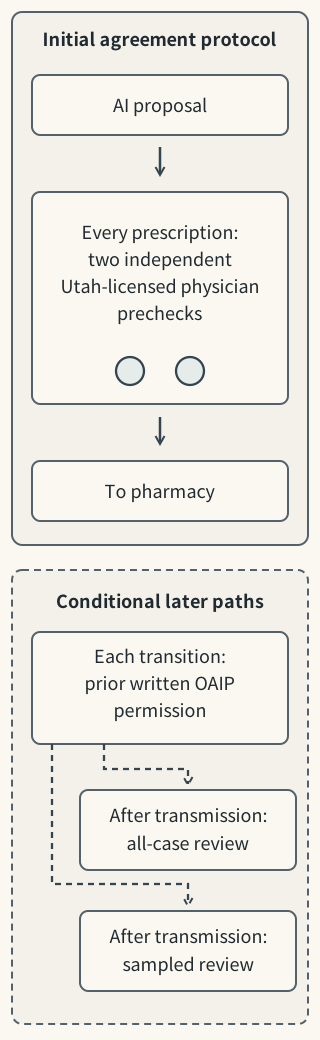
The distinction is where human involvement sits. A check before transmission creates an opportunity to identify a problem before the proposal reaches the pharmacy. Retrospective review examines a decision already made. Calling both ‘physician oversight’ does not give the reader the same answer about the final check. This explains a structural difference; it does not establish the safety of either pathway.
Elapsed time or patient totals alone do not authorize progression. This agreement does not exempt compliance with federal law. This reporting did not verify Nolla’s FDA clearance or exemption status.
STAT’s Mario Aguilar distinguished initial clinical review from the possibility of later removing individual pre-review in the October 5 public lede.
Healthcare Dive’s Anuja Vaidya also reported on Utah’s new health AI pilots on October 6. The two reports demonstrate specific newsroom attention to the experiment. They do not demonstrate completed clinical validation or an industry-wide position for or against it.
This reporting did not verify later-stage permission or actual patients’ current stage. We therefore do not assert that every current prescription follows the initial pathway. Patient totals, safety outcomes and actual service availability were not verified either.
V’s view is to ask when a check happens and who is responsible before treating ‘AI prescribing’ as the explanation. If a later report describes changed oversight, the next questions are which written permission authorized it, when it changed, and how problems were detected and handled afterward. With sampled review, detecting problems in unreviewed cases also matters. Evidence connecting permitted pathways, actual operations and safety is needed to judge the experiment further.