In Pew’s survey released October 1, 52% in South Korea judged social media beneficial on balance for their country’s democracy. In the US, 64% judged it harmful on balance. [1]
That question weighs all advantages and disadvantages. A separate question asks about specific effects of internet and social-media access. In South Korea, 79% said it made manipulation through false information and rumors easier. Overall judgment and particular worries answer different questions. [2]
The report’s authors suggest that having a political voice may help explain positive assessments. Read this as an interpretation, not a tested cause. [1]
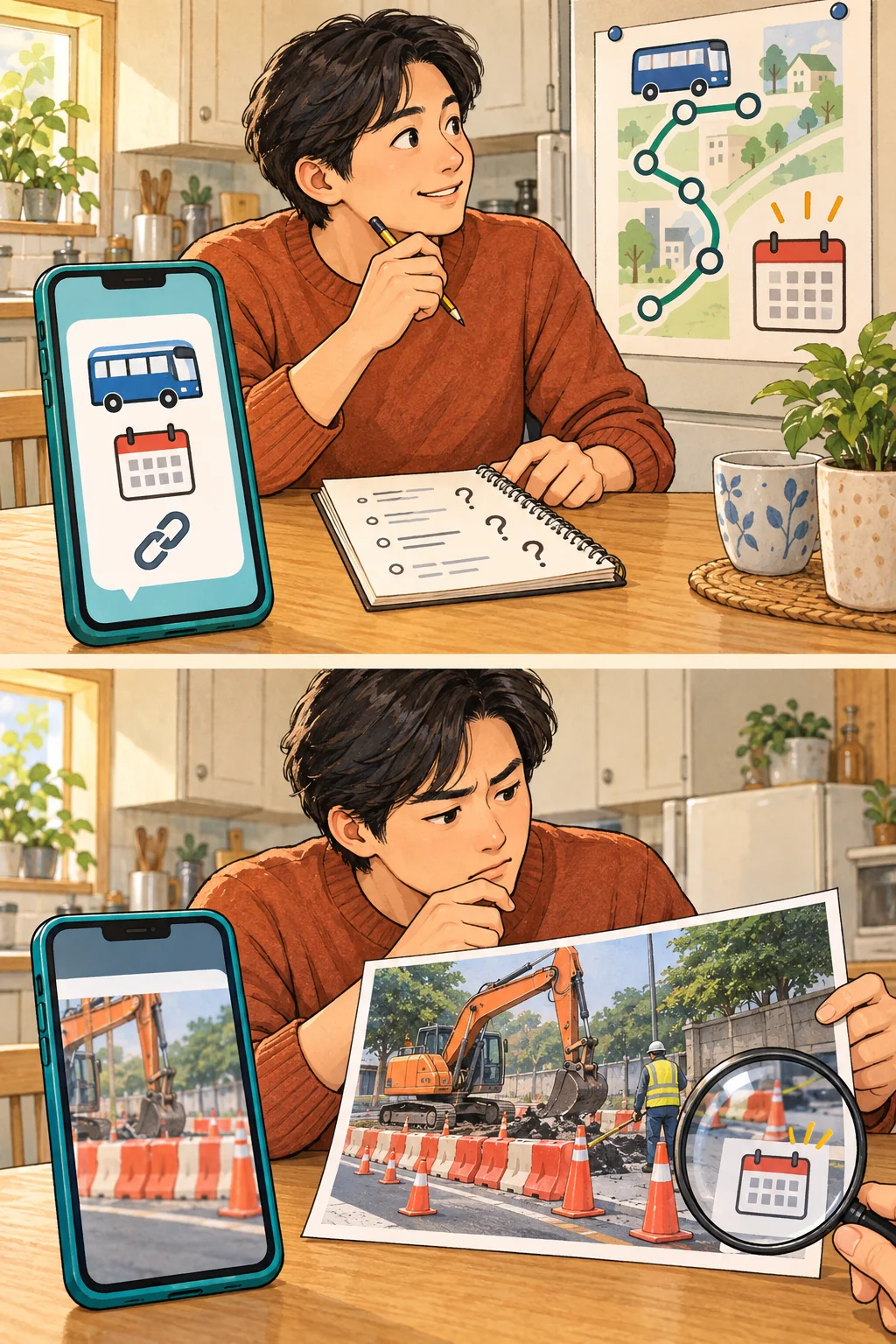
Imagine a neighborhood chat. A link inviting comments on a new bus route alerts you to a public meeting. Then an old construction photo arrives with its date cropped off, prompting rumors that the road is closed today. This fictional example offers a useful opportunity and a doubtful message. It illustrates how the two questions differ; it does not reconstruct a respondent’s experience or combination of answers.
V’s view
I would ask the two messages different questions: where can I submit a comment, and when was this photo taken? If original posts and dates became easier to open, keeping opportunities to participate while checking doubtful messages might also become easier. This is the way I would like to use a chat, not an effect tested by the survey.
Survey background
Fieldwork covered 45,658 adults in 37 countries and territories, including South Korea and the US, February 8–May 13, 2026. This measured perceptions, not causal effects on democracy. [1]
US democracy responses came from 3,507 adults surveyed March 23–29. [3]
Read next
For another look at what survey answers leave open, read Nodavue’s “When AI speeds up work, who decides what comes next?” Two questions also lead to different readings of the working day. [4]